2026: Volume 5, Issue 1
Current Issue
 Abstract
  PDF
PDFObtaining Peroxide Compounds by Electrolysis in Aqueous Solution
Ramiz K. Bayramov
LLC "Olympia", Novomoskovsk, st. Transportnaya 26, 301650,Tula region, Russia
*Corresponding author: LLC "Olympia", Novomoskovsk, st. Transportnaya 26, 301650, Tula region, Russia, E-mail: [email protected]
Received: February 03, 2026
Published: May 18, 2026
Citation: Bayramov RK. (2026). Obtaining Peroxide Compounds by Electrolysis in Aqueous Solution. Catalysis Research. 5(1):22.
Copyright: Bayramov RK, © (2026).
ABSTRACT
This review article is based on a literature review, including our own work on the production of peroxide compounds. The chemical production of these compounds is a multi-stage and technologically complex process. Electrochemical synthesis of peroxide compounds requires studying the stabilization conditions for the anion-radical species formed in this process. Analysis of literature data revealed that the formation of peroxide compounds during electrolysis is significantly influenced by the composition of the electrolyte used, the electrolysis temperature, the nature of the electrodes (anodes), the pH of the medium, and other factors. Previous assumptions regarding the stabilization of radical species at low electrolysis temperatures are confirmed. The degree of stabilization of unstable anion-radical species formed during electrolysis is significantly affected by the nature of the anions. It has been shown that the probability of mutual scavenging reactions between radicals formed during low-temperature electrolysis, resulting in the formation of peroxo compounds, is determined by the ratio of the rates of surface secondary reactions of radical species formed during anion discharge.
Keywords: Electrolysis, Anion, Electrolyte Composition, Radical Species, Electrolysis Temperature
INTRODUCTION
The diversity of reactions occurring at the anode and their high sensitivity to mutual influence, as well as their strong dependence on external conditions, make the production of final products one of the most complex processes in electrochemical production. Based on the experimental data available in the literature, it is difficult to draw a definitive conclusion about the existence of a profound relationship between these reactions or the influence of the electrode surface condition on the kinetics and mechanism of the process. Understanding the factors that determine the selectivity of electrode reactions is essential for the rational management of this process. Using various research methods (polarization and impedance measurements, balance experiments, etc.), an attempt is made to gain a deeper understanding of the mechanism of the electrode reactions under study and to establish the specifics and influence of electrode surface formations on the nature of the anodic process. An important role in the process of electrochemical oxidative synthesis is played by: the nature of the anodes used, the additives introduced into the electrolyte, the low electrolysis temperature, etc. It is known that with a decrease in the temperature of the reaction zone, the stability of intermediate unstable radical particles increases. At the same time, the concentration of intermediate radical particles on the electrode surface increases and the probability of their interaction with other discharging particles to form new compounds increases [1-7]. The interest shown by many researchers in the processes of oxidative synthesis at high anodic potentials in aqueous solutions is caused by the production of various types of organic and inorganic compounds, including peroxo compounds, which exhibit strong oxidizing properties. The latter are used in various industries: the chemical industry, medicine, agriculture, etc. They can also be used in chemical processes as a source of anion-radical particles with the production of the desired valuable products. In this regard, the interaction of anion-radical particles formed during the discharge of different anions is of interest. In the work [8,9] the production of peracetic (peroxoacetic) acid by a chemical method is described, the essence of which is that a 1% catalyst solution (H2SO4) is added to a stoichiometric mixture of acetic acid and 98% hydrogen peroxide and left for 12-16 hours at room temperature. Peroxoacetic acid is isolated from the reaction mixture by vacuum distillation (at a pressure not exceeding 30 mm to avoid explosion) in the presence of sensitizers, as well as by fractional freezing.
In [10] it is proposed to obtain peroxoacetic or peroxopropionic acids by liquid oxidation of the corresponding aldehyde at a temperature of 20-600 C and a pressure of 1-15 atm. in the presence of a catalyst - iron or cobalt acetate - in a solvent at a high conversion of aldehyde. The oxidation process is carried out in two zones. In the first zone, the oxidation of the aldehyde is carried out to 80-90% conversion, and in the second - to 90-99% with the simultaneous separation of the catalyst onto an ion-exchange resin in the form of H + containing sulfo groups, based on styrene and divinylbenzene. The process is preferably carried out at a temperature of 35-400 C and a catalyst concentration of 0.001-0.005 wt.% based on aldehyde. Under these conditions, increased selectivity of the process with a high degree of aldehyde conversion is ensured. The disadvantages of the chemical method include the multi-stage nature of the process, the use of aggressive oxidizing agents, and the use of complex process equipment. The authors [11] found an interesting solution for producing peroxoacetic acid. They propose producing peroxoacetic acid by electrolysis of aqueous solutions of an alkali metal or ammonium acetate in the anode compartment of a diaphragm electrolyzer in the presence of small quantities (0.5-2 g/l) of alkali metal or ammonium thiocyanate at a current density of 0.05-1.0 A/cm2, followed by concentration of the resulting aqueous acid solution by evaporation or vacuum distillation. In the presence of an alkali metal or ammonium thiocyanate, the Kolbe synthesis reaction [11,12] is completely suppressed, leading to the oxidation of the carboxylate ion with the participation of water molecules:
R-COO- + H2O -2e = RCOOO- + H+ (1)
In the absence of a metal thiocyanate, the acid is not synthesized. In [13], it was proposed to also obtain peroxoformic acid and its salts by electrochemical means. The reactions are carried out in 0.5-2.0 M solutions of formic acid or its alkaline salts in a diaphragm electrolyzer using a lead dioxide anode. In the presence of ammonium thiocyanate at a concentration of 1.0-1.5 g/L, the anode current density is 0.05-0.5 A/cm2. The positive side of the electrochemical method, according to the authors, is: simplification of the process, increase in the yield and quality of the final product, as well as the elimination of the use of explosive oxidizing agents. In [14] the influence of various factors (electrolyte concentration, electrolysis temperature, pH of the medium, etc.) on the oxidation process of potassium phosphoric acid salt solutions on a platinum anode was studied. The experiments were conducted in an electrolyzer with an interelectrode space separated by a glass diaphragm. The intensity of the oxidation process increases in the series: K3PO4, K2HPO4, and KH2PO4. The authors found that perphosphate compounds are stable at room temperature and slowly decompose with increasing temperature. The process of obtaining peroxomonophosphate in [15] was studied using the labeled atom method. A mixed solution of dibasic potassium phosphate (2 M), potassium fluoride (4 g/l) and potassium chromate (0.32 g/l) with a pH of 9 was used as an electrolyte. The electrolyte was cooled with ice water or a mixture of carbon dioxide and alcohol to a temperature of 5-10 C, the anode current density was 1.6-2.2 A/cm2. The authors found that peroxomonophosphate decomposes with the cleavage of the peroxide bond. Moreover, under these conditions, oxygen is released only from peroxomonophosphate, regardless of its concentration. The authors [16] investigated the process of obtaining potassium peroxodiphosphate by electrolysis in an electrolyte containing 480 g/l K3PO4, 120 g/l KF. Glassy carbon was used as an anode. The experiments were carried out at an anode current density of 1.2 A/cm2 and an electrolysis temperature of 170 C. The output current (CO) of peroxodiphosphate was 85%. When the process was carried out under the same conditions, but with a platinum anode, the output current of peroxodiphosphate decreased and amounted to 79%. A method for synthesizing peroxomonophosphate, including the use of boron-doped diamond electrodes in the electrolysis process, is described in [17]. The amount of the formed oxidizer (peroxomonophosphate) depends on the process conditions: pH of the medium, electrolyte concentration, electrolysis temperature and current density. Electrolysis was carried out in a phosphoric acid solution (concentration from 0.5 to 2.0 M) with a pH from 1 to 5, which was maintained at a given level by continuous addition of potassium hydroxide. The anode current density ranged from 200 to 1300 A•m⁻², and the electrolysis temperature ranged from 10 to 400 C. Electrolysis of phosphate solutions at acidic pH leads to the formation of peroxomonophosphate. This process is less efficient than the formation of peroxomonophosphate (during the electrolysis of phosphate solutions at alkaline pH), which is apparently due to the lower chemical stability of the peroxomono compound. The amount of hydrogen peroxide formed increases significantly with the number of H2PO4 ions available for oxidation. The optimal concentration of H2PO4 solution for the synthesis of peroxodiphosphate using boron-doped diamond anodes was 1 M. To achieve high efficiency, low temperatures and high current densities are recommended. A significant effect of current density and the initial electrolyte on the process was noted. According to the authors, this is explained by the participation of hydroxyl radicals in the oxidation process occurring on the surface of the diamond electrode. In experiments conducted at a potential below the oxidation potential of water, hydroxyl radicals were not formed. Under these conditions, peroxomonophosphate, formation occurs through direct electron transfer. At higher potentials, both the direct mechanism and the hydroxyl radical-mediated mechanism participate in the formation of the oxidant, and the process becomes more efficient. The authors conclude that the simultaneous presence of phosphate and hydroxyl radicals is a necessary condition for the formation of peroxomonophosphate in significant quantities. In [18] it is proposed to obtain persulfuric acid by electrolysis in concentrated solutions (510-798 g/l) of sulfuric acid on a platinum or platinum-titanium anode in the presence of additives, which are fluorine-containing compounds. A significant portion of persulfuric acid and its salts in industry is obtained by the electrolysis of sulfuric acid and sulfates [19]. The anodic process in a perchloric acid solution was studied in [4, 5 and 20]. Like persulfuric acid, the dimerization product of perchlorate radicals should be Cl2O8. However, there are no reports in the literature on the formation of this compound. During the electrolysis of 8N HCIO4 at an electrolysis temperature of -300C chloric anhydride (Cl2O7) begins to form [4, 5]. The authors believe that this is due to a reaction occurring at potentials above 3.1 V:
2 ClO4 – -2e = Cl2O7 + 0.5 O2 (2)
At potentials above 3.0 V, the capacitance of the electric double layer decreases, reaching a minimum of tenths of a microfarad per 1 cm2. It was established that chlorine anhydride cannot be synthesized in 5N HCIO4, and the capacitance in this potential range (above 3.0 V) decreases only slightly. In [4], it was shown that during the electrolysis of a 55-73% HCIO4 solution in the temperature range from 0 to -50°C at a potential above 3.1 V, chloric anhydride forms as a separate liquid phase. The authors note that the resulting substance has two distinctive features. The first is that during synthesis, the resulting substance is yellowish in color due to contamination with lower chlorine oxides. Subsequently, during storage in a sealed container, the resulting product completely discolors, indicating the presence of an oxidizing agent capable of oxidizing lower chlorine oxides. The second feature manifests itself in the nature of its interaction with water, during which gas evolution is observed. The volume of released oxygen was equal to the volume of the substance. These factors may serve as an indirect indication of the presence of Cl2O8, which decomposes according to the reaction:
Cl2O8 + H2O = 2 HCIO4 (3)
Of interest is the study of the behavior of radical particles formed during the combined discharge of different inorganic anions. The electrochemical process in the binary system sulfuric acid + perchloric acid was studied in [1-3]. The polarization curve on platinum, removed in a mixture of acids 12N H2SO4 + 3N HClO4 at a temperature of -30°C, consists of 4 sections: section 1 in the potential range of 2.2-2.6 V; section 2 – at φ = 2.75-3.1 V; 3 – section at φ = 3.25-3.5 V and 4 section – at φ = 3.9-5.0 V, delimited by transition and passivation regions [2]. To clarify the nature of the processes occurring in different sections of the polarization curve, the authors carried out balance experiments, i.e. a complete quantitative analysis of all electrolysis products formed at a controlled potential over a certain time was carried out. In the first section, oxygen and ozone are formed, and O3 begins to form at a potential of 2.3 V, the current output (CO) of which increases with increasing potential, reaching 11.5% at φ = 2.6 V, and then drops, starting from φ = 2.7 V. On the C-φ curve in this section, the capacity continues to decrease, which, in the opinion of the authors, is due to the accumulation of electrolyte anions - ClO4- and HSO4- - on the electrode surface. The formation of H2S2O8 increases with increasing potential in the range of 2.75-3.1 V and reaches a current output of 53-58%. The overpotential of the reaction of H2S2O8 formation in the binary electrolyte is 250 mV higher than in the sulfuric acid solution. Consequently, the rate of persulfuric acid formation at equal potentials in the binary electrolyte is lower than in the sulfuric acid solution. In the third section, starting from φ = 3.25 V, against the background of a decrease in the yield flow (EF) of persulfuric acid, the formation of a new substance is observed at the anode, which is released as a separate liquid phase. The obtained substance was identified by a set of physicochemical methods as diperchloratepersulfate (S2O8(ClO4)2) [2]. With an increase in potential from 3.2 to 3.5 V, a practically linear increase in the СО of diperchlorate persulfate occurs from 2 to 20%. At the same time, the persulfuric acid efficiency drops from 58 to 27%. This is logical, since it involves the consumption of S2O8 radicals formed during the discharge of sulfuric acid ions. In section 4 (φ = 3.9-5.0 V), another new compound is formed, which also accumulates in the anolyte as a separate liquid phase. The resulting substance is stable only at a temperature of -20 °C. It was identified as diperchloratesulfate (SO4(ClO4)2) and is a strong oxidizing agent. The reaction of diperchloratesulfate with acetone, benzene, toluene, etc. at a temperature of +25 °C is exothermic and is always accompanied by an explosion. Section 4, where diperchlorate sulfate synthesis occurs, is preceded by a passivation region (3.5-3.9 V). The passivation process is accompanied by an increase in resistance and a decrease in capacitance to 0.1 μF/cm2. This change in the electrode impedance components indicates the adsorption of dipole-type particles on the oxidized anode surface. According to the authors of [2], such particles are SO4 radicals. This change in the electrode impedance components indicates the adsorption of dipole-type particles on the oxidized anode surface. According to the authors of [2], such particles are SO4 radicals. In the passivation region, significant changes occur in the nature of surface compounds as a result of the appearance of new particles, SO4 radicals, on the electrode surface. The current efficiency of SO4(ClO4)2 is 18-20%, and that of CO oxygen is ~62%. Along with the formation of diperchlorosulfate and oxygen, persulfuric acid and small amounts of ozone are synthesized in this section of the ϕ-lgi curve. In [3] it was shown that during electrolysis in a solution of 15N H2SO4 + 1 N HClO4 at a temperature of -30°C in the potential range of 4-6 V, a new substance is formed in the form of a separate phase, which is a gel-like mass, which in its properties differs significantly from the compounds previously obtained in the process of electrolysis in a mixture of 12NH2SO4 + 3NHClO4, diperchloratepersulfate (S2O8(ClO4)2) and diperchloratesulfate (SO4(ClO4)2). The resulting substance is more viscous and does not completely dissolve in CCl4. The portions of the substance undisclosed in carbon tetrachloride react slowly upon contact with water, forming O2 and H2SO4. A comprehensive analysis of the physicochemical properties of the resulting product revealed that this substance is sulfur peroxide (S2O8). As the potential increases above 6.0 V, the sulfur peroxide content in the mixture increases; this can lead to the complete cessation of the anodic process. According to the authors, this may be due to the formation of a fairly strong film on the anode surface, consisting primarily of sulfur peroxide.
Of considerable interest is the study of the possibility of scavenging radical species formed during the discharge of anions of various (inorganic and organic) origins.
The electrolysis of an aqueous acetate solution at positive temperatures has been thoroughly studied and described in the literature [7,21-23]. The results of a study of the electrolysis of a binary mixture of 10N H2SO4 and 2N CH3COONа are described [6, 24]. At a potential above 3.2 V and a temperature of -20 °C, a new substance is formed during the process, precipitating as a separate liquid phase. The resulting substance was analyzed and identified as peroxyacetatebisulfate (CH3COOOSO3H). This compound is unstable at positive temperatures. Thermal decomposition at t = +15°C occurs with the release of oxygen with small impurities of carbon dioxide, and sulfuric and acetic acids are formed in the liquid phase. It was shown that at positive temperatures in this potential range, peroxyacetatebisulfate does not form. The current output (CO) of peroxyacetate bisulfate increases with increasing potential, at φ = 4-5 V, a temperature of -20 °C and reaches ~10%.
This review article analyzes literature. Our experimental results are examined in more detail. We studied the processes occurring in pure (nitric acid and its salts) and binary systems (perchloric acid + sodium acetate, perchloric acid + sodium propionate), as well as nitric acid or sodium nitrate in the presence of acetic and propionic acid salts), which we will discuss.
EXPERIMENTAL PART
To elucidate the fundamental patterns of the processes being studied and the state of the anode surface, a combination of methods was used: electrolysis at controlled potential, impedance measurements, and others. The resulting products were identified using various methods, including chromatography, microanalysis, impedance measurements, and others. Since nitric acid is easily reduced at the cathode to nitrous acid, NO2, NO, and other products depending on the electrolysis conditions and amines are formed in the presence of organic ions [25], complete separation of the electrode spaces is essential. In this case, it was impossible to use an electrolyzer of the old design during the experiments. In this electrolyzer, the electrode spaces were separated by a porous glass diaphragm, through which the products of cathodic acid reduction penetrate the anolyte. The latter are oxidized by oxygen formed at the anode and significantly affect its output current. To prevent the penetration of acid reduction products into the anolyte, a new design of electrolyzer was developed in which the interelectrode spaces were separated by cation exchange membranes [26,27]. The most suitable cation exchange membrane was the MK-100 [28]. It demonstrated good selectivity for cations, which was tested using labeled carbon in a sodium propionate solution and a sensitive analytical reaction for nitrite ion [29]. Before the experiments, the membrane was chemically cleaned in 1 N sulfuric acid and bidistillate water for 40 minutes in each solution. Electrolysis was carried out in an electrolyzer with a cooled platinum anode, the interelectrode space of which was separated by a cation exchange membrane, at a controlled potential maintained by a P-10A potentiostat (output voltage 25 V, maximum possible current 10 A). The temperature of the anode, anolyte and catholyte was measured with chromel-copel thermocouples and controlled by a KSP-4 potentiometer. Electrolyte solutions were prepared using double-distilled water, nitric, perchloric, acetic, and propionic acids of exceptional purity, and double-recrystallized acetic and propionic acid salts. To determine the balance of electrolysis products, the evolved anode gases were first passed through a trap with a neutral potassium iodide buffer solution to separate and quantify ozone and then collected in a calibrated gas burette. Gas samples were taken from the burette and analyzed using a TSVET-1 chromatograph. It was found that the main oxidation product of acidic solutions is oxygen, along with a small amount of ozone (~0.5%). Potential measurements were performed using an EC-1 digital voltmeter relative to a normal hydrogen or saturated calomel electrode. Potential values are given relative to a reversible hydrogen electrode in the same solution (φr). Photocalometric analysis was used to determine nitrite ion in the anolyte. This method is based on color formation during the reaction of nitrite ion with a reagent containing 1% sulfanilic acid, 0.3% α-naphthylamine, and 20% tartaric acid (Griss-Iloev reagent). Measurements were performed on an M-46 spectrophotometer in 1 x 1 cm cuvettes.
The capacitance and resistance of the system at a given potential were measured using two AC bridges: one with a series equivalent circuit and one with a parallel equivalent circuit. At high potentials, the large measured capacitance values in the series circuit (hundreds of μF) make the obtained data unreliable, and it is impossible to extend the range of measured potentials. Using a parallel circuit with a series resistance equivalent to the resistance of the solution sometimes overcomes these difficulties. The data obtained on both bridges, after appropriate conversion from a series circuit to a parallel circuit, agree well with each other. The molecular weights of the new peroxo compounds (peroxoacetate perchlorate and peroxopropionate perchlorate) were determined parametrically using a HITACHI Model 115 instrument. IR spectra of the compounds in chloroform were recorded to determine functional groups. Analysis of the spectra shows that the compounds exhibit absorption bands corresponding to the ClO4 group (1050 cm-1), bands associated with deformation vibrations of the CH3-C and CH2 groups (1420-1480 cm-1) in C2H5, and weak absorption bands of carbonate associated with the peroxide group (1820 cm-1).
RESULTS AND DISCUSSION
In [30,31], the preparation of new peroxocompounds (peroxoacetateperchlorate and peroxopropionateperchlorate) was demonstrated by the electrolysis of mixtures containing perchloric acid and sodium acetate, and perchloric acid and sodium propionate. Figure 1 shows the polarization curves recorded on a platinum electrode in a mixture of 8N HCIO4 and 2N CH3COONa, as well as the corresponding changes in the capacitance of the double layer with potential. For comparison, the polarization and capacitance curves for 6N perchloric acid and similar data for 2N sodium acetate are also shown.
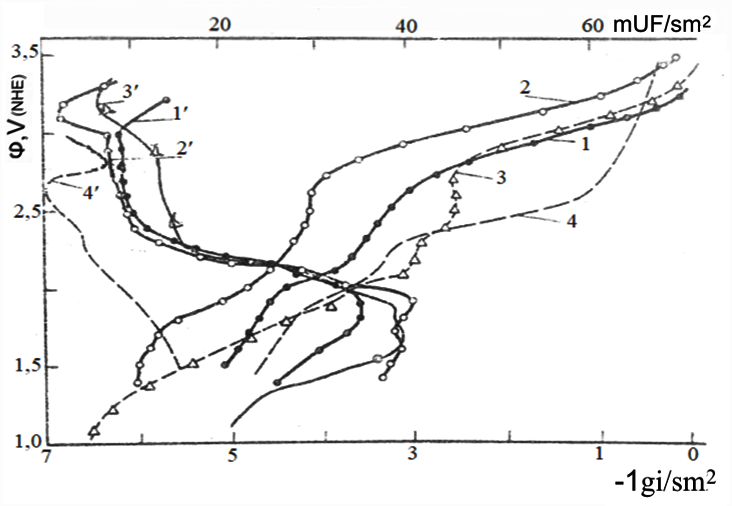
Figure 1: Polarization curves and change in double layer capacitance in solutions
8N HCIO4 + 2N CH3COONa (t = +25°C, curves 1, 11); (t = -20°C, curves 2, 21);
6N HCIO4 (t = -20°C, curves 3, 31);
2N CH3COONa (t = -10°C, curves 4, 41)
The figure shows that the polarization curves in the mixture at room and low temperatures are close to those for pure perchloric acid (curves 1–3) and differ from the curve for sodium acetate (curve 4). In the first three cases, there is a large transition region and a second kinetic region higher (2.7 V), associated with the discharge of CIO4- -ions. According to literature data, the discharge of acetate ions begins at a less positive potential. Acetate adsorption significantly reduces the capacity of the electrical double layer compared to pure perchloric acid (curves 3' and 4'). In solutions of the mixture, a noticeable decrease in the capacity of the double layer is observed at potentials corresponding to the active discharge of the acetate ion (curves 1'–3'). The behavior of the C–φ curves above the 3V potential in the region of formation of new compounds is of interest. At low temperatures, both in pure perchloric acid and in mixtures with acetate, a clear minimum in capacity is observed, which increases significantly for the mixed solution (curve 2'). It is known that the appearance of a capacity minimum at low temperatures is associated with the formation of adsorbed anion-radical particles CIO4 on the electrode surface, which participate in the synthesis processes. It was found that during the electrolysis of a mixture of 2N acetate or propionate solutions and 8N perchloric acid at a temperature of -20°C in the potential range above 3.5 V for several hours, an oily liquid is formed, which precipitates at the bottom of the electrolyzer as a separate liquid phase. Using a combination of methods (elementary microanalysis, IR spectroscopy, parametric determination of molecular weight, etc.), the products obtained during the electrolysis of mixtures of perchloric acid with sodium acetate and perchloric acid with sodium propionate were identified as peroxoacetateperchlorate (CH3COOOCIО3) and peroxopropionateperchlorate (C2H5COOOCIО3), respectively [28, 29]. Both compounds are strong oxidizing agents.
Based on an analysis of the obtained results, the formation process of these compounds can be represented as follows. At potentials above 3.1 V, a combined discharge of organic and inorganic anions becomes possible. At positive temperatures, carboxylate radicals are unstable and easily decompose to form alkyl radicals and carbon dioxide. Lowering the temperature of the reaction zone promotes partial stabilization of the carboxylate radicals, allowing the dimerization reaction to proceed via a recombination mechanism:
CH3COOads. + CIO4ads. → CH3COOOCIO3 (4)
C2H5COOads. + CIO4ads. → C2H5COOOCIO3 (5)
or electrochemical desorption:
CH3COOads. + CIO4- – e → CH3COOOCIO3 (6)
C2H5COOads + CIO4 – e → C2H5COOOCIO3 (7)
The current of output the newly obtained compounds is approximately 15%. The remaining current is spent on the release of oxygen, synthesis byproducts, and the oxidation of CH3ads and C2H5ads radicals by surface oxygen to CO2 and water.
The following phenomena were observed in [26,32,33]: excess current output (CO) of oxygen over 100%, formation of nitrogen dioxide (N2O4) in the electrolyte, appearance of steam (NO2) above the solution with increasing electrolyte temperature, and a decrease in capacity to 0.1 μF/cm2 at an electrolysis temperature of -26°C. The observed effects increase with decreasing temperature and increasing acid concentration. Analysis of the obtained data, taking into account possible equilibria in nitric acid known from the literature [34-37], showed that these phenomena can be explained by the decomposition of a nitrogen-containing compound richer in oxygen, such as nitrogen peroxide (N2O6), formed during the electrolysis of concentrated acid at low temperatures with the release of oxygen and nitrogen tetroxide (N2O4). Unfortunately, further reduction of the electrolysis temperature becomes impossible due to freezing of the aqueous electrolyte. The study and selection of a non-aqueous (organic) solvent for the preparation of a concentrated nitric acid solution will significantly reduce the electrolysis temperature. Carrying out the process in such a system can lead to the formation of NO3 radicals, the dimerization of which can lead to the formation of a dimeric product – nitrogen peroxide (N2O6).
Apparently, the NO3 radical was first detected by EPR during the photolysis of nitric acid at a temperature of 170 K [38].
Since the observed phenomena result from the decomposition of nitrogen peroxide, it is necessary to find conditions under which the binding of NO3 radicals is possible. In this regard, the electrolysis process in a mixture of nitric acid or its salt in the presence of salts of acetic (system 1) and propionic acids (system 2) was studied [39]. It was shown that in an acidic medium in both systems, as well as in a slightly alkaline medium of a mixture of sodium acetate and nitrate, the oxygen formed during the oxidation of the nitrate ion reacts with alkyl radicals over a wide temperature range to form nitrogen dioxide and carbon monoxide. In a weakly alkaline environment during the electrolysis of mixtures of sodium nitrate and propionate, some of the nitrate radicals formed during the process react with alkyl radicals, forming mixtures of organic nitrates, which are released as a separate liquid phase. A mechanism for the formation of organic nitrates has been proposed.
As noted in [11,12], the introduction of a small amount of alkali metal thiocyanate into the electrolyte (sodium acetate solution) leads to the complete cessation of the Kolbe synthesis reaction. In other words, acetate ions discharged on the anode surface are converted to carboxylates radicals. Using this technique to study the oxidation of mixtures of nitric acid and sodium acetate at low temperatures during electrolysis may yield interesting results.
Analysis of the experimental data obtained suggests that the probability of electrochemical synthesis with the formation of final products is determined by the ratio of the rates of surface secondary reactions of radical particles formed during the discharge of anions
CONCLUSION
The electrochemical oxidation of nitrate anions in pure nitric acid and binary mixtures (sodium nitrate with salts of acetic and propionic acids), as well as in perchloric acid with sodium acetate or propionate, was studied over a wide temperature range. It was found that, due to the high instability of nitrate radicals, the formation of a dimeric product (N2O6) does not occur during the electrolysis of concentrated nitric acid at low temperatures. During the electrolysis of binary mixtures (nitric acid with sodium acetate, nitric acid with sodium propionate) in an acidic medium and in a weakly alkaline mixture of sodium nitrate and sodium acetate, the nitrate radical decomposes to form oxygen, some of which oxidizes alkyl radicals to form carbon dioxide. In a mixture of sodium nitrate and propionate in a slightly alkaline medium, due to the cleavage of the double bond in the resulting ethylene, some of the resulting nitrate radicals react with ethylene at this bond, forming an intermediate complex that reacts with other species in the electrolyzer to form organic nitrates. A mechanism for their formation is proposed.
It has been established that during the electrolysis of binary mixtures (perchloric acid + sodium acetate, perchloric acid + sodium propionate) at low temperatures, new peroxide compounds (peroxoacetate perchlorate and peroxopropionate perchlorate) are formed.
It has been shown that the probability of formation of end products (peroxide compounds and organic nitrates) during electrolysis is determined by the ratio of the rates of surface secondary reactions of radical species formed during the discharge of anions.
REFERENCES
- Rakov A.A., Potapova G.F., Veselovsky VI. (1970). Low-temperature electrochemical synthesis of higher oxygen compounds in platinum electrolysis in a mixture of sulfuric and perchloric acids. Electrochemistry. 6(11):1730–1734.
- Potapova GF, Rakov AA, Veselovsky VI. (1973). Low-temperature electrochemical synthesis of peroxy compounds on a platinum electrode in a mixture of sulfuric and perchloric acids. Synthesis of diperchlorate sulfate. Electrochemistry.. 9(7):1054–1058.
- Potapova GF, Rakov AA., Veselovsky VI. (1973). On the electrochemical synthesis of sulfur peroxide. Electrochemistry. 9(9):1410–1411.
- Kasatkin EV, Rakov AA, Veselovsky VI. (1967). Electrochemical Synthesis of Chloric Anhydride. Electrochemistry. 3(9):1034–1039.
- Kasatkin EV, Rozental KN, Yakovleva AA, Veselovsky VI. (1969). On the Mechanism of Electrode Reactions in the Anodic Oxidation of Perchloric Acid to Chloric Anhydride. Electrochemistry. 5(2):139-144.
- Yakovleva AA, Tovpinets EI, Veselovsky VI. (1971). Electrochemical low-temperature synthesis of peroxyacetate bisulfate. Electrochemistry. 7:735–737.
- Yakovleva AA, Kaidalova SN, Skuratnik Ya B, Veselovsky VI. (1972). Adsorption of acetate on smooth platinum at high anodic potentials. Electrochemistry. 8:1799–1802.
- Antonovsky VA. (1972). Organic peroxide initiators. M. 341-474.
- Swem D. In the book. (1970.). Organic peroxides. 313-474.
- Levush SS., Garbuzov IA., Prisyazhnyuk EV, Brokhovetsky VA. (1982). Method for producing peracetic or perpropionic acid. Patent. SU 979336.
- Khidirov Sh Sh., Khibiev Kh S. (2003). Method for producing peroxoacetic acid. Patent. RU 2216537.
- Khidirov Sh Sh. (1992). Voltammetric study of electrode processes in acetate solutions on a Pt anode. .Electrochemistry. 28(2):158-182.
- Mamedbekov RM, Khidirov Sh.Sh, Khibiev Kh S. Method for producing peroxymuravic acid. Patent. RU 22998786537.
- Khachaturyan OB., Kravchinsky AP. (1963). Study of Anodic Processes and Conditions of Formation of Peroxide Compounds in Solutions of Phosphoric Acid Salts. Chemistry of Peroxide Compounds. Moscow: USSR Academy of Sciences. 162–168.
- Potemskaya AP, Lunenok-Burmakina VA. (1969). Isotope Study of Electrochemical Formation of Peroxomonophosphate, Peroxomonosulfate. Ukrainian Chemical Journal. 35(4):339–344.
- Khomutov NE, Malin OG, Chergeiko NM, Zakhodyakina NI, Bogoslovsky KG, Khachaturyan OB, et al. (1971). Method for producing an inorganic peroxide compound. Patent. SU 827600.
- Weiss E, Saez C, Croenen-Ceppano K, Canizares P, Savall A, Rodrigo MA. (2007). Electrochemical synthesis of peroxomonophosphate using boron-doped diamond anodes. Journal of Applied Electrochemistry. 38:93-100.
- Seryshev GA, Sukhotina LP, Adzhemyan Zh Ts. (1977). Electrochemical method for producing persulfuric acid. Patent. SU 585236.
- Fedotyev NP, Alabyshev A, Rotinyan AP, Vyacheslavov PM, Zhivotinsky PB, Galnbek AA. (1967). Applied electrochemistry. M.: Chemistry. 400.
- Beck TR, Moulton RW. Oxygen Overvoltage in Concentrated Acid Solutions J. (1956). Electrochem Soc. 103:247-252.
- Fioshin M Ya, Vasilyev Yu B, Gaginkina EB. (1960). On the in flounce of the nature of the cation on Kolbe electrosynthesis. Reports of the USSR Academy of Sciences. 134:879-882.
- Kazarinov VE, Girina GP. (1967). Study of the Structure of the Double Electric Layer on Platinum in the Presence of Acetate Ions. Electrochemistry. 3:107–110.
- Weinberg HR, Weinberg NL. Electrochemical Oxidation of Organic Compounds. Chem. Rev. 1968. 68:449–523.
- Tovpinets EI, Skuratnik Ya B, Yakovleva AA., Veselovsky V.I. (1972). Study of the Mechanism of the Electrochemical Oxidation of Platinum in the Acetate-Sulfuric Acid System Using the Labeled Atom Method .Electrochemistry. 8:301–303.
- Alekseeva NI, Zytner Ya D, Nikolsky VA. (1970). On the mechanism of electrochemical reduction of nitric acid in various media. Zh. Prikl. Chem. 4311:2463–2468.
- Bayramov RK, Yakovleva AA, Veselovsky VI. (1975). Electrochemical oxidation of nitric acid on a platinum electrode. 1. Features of the process in concentrated acid at low temperatures. Electrochemistry. 11(1):156–159.
- Yakovleva AA, Bayramov RK. (1978). Electrochemical cell with separation of anode and cathode spaces using a cation exchange membrane. Protection of metals. 14(4):518-519.
- Nikolaev NI, Guvileva GG, Popova GI. (1975). Dependence of the electrical conductivity of ion-exchange membranes on the concentration of the external solution. Russ. J. Phys. Chemistry. 49(6):1566–1567.
- Babko AK, Pilipenko AE. (1974). Photometric Analysis, Methods of Analysis of Non-Metals. Moscow: Chemistry. 360.
- Veselovsky VI, Yakovleva AA, Bayramov RK. (1977). Method for Obtaining Peroxoperchlorates. Patent. SU 597673.
- Yakovleva AA, Bayramov RK, Veselovsky VI. (1979). Low-Temperature Electrochemical Method for Obtaining Alkyl Peroxoperchlorates. Electrochemistry. 15(8):1114-1118.
- Yakovleva AA, Bayramov RK., Veselovsky VI. (1975). Electrochemical oxidation of nitric acid on a platinum electrode. II. Surface state of a platinum anode during electrolysis of nitric acid. Electrochemistry. 11(1):515–518.
- Bayramov RK. (2025). Oxidation of Nitrate Ions at a Platinum Anode. Journal of Engineering and Applied Sciences Technology.
- Gray P, Joffe AD. (1955). The Reactivity and Structure of Nitrogen Dioxide. Chem. Rew.. 55(6):1069–1154.
- Longstaff VL, Singer K. (1954). The Kinetics of Oxidation by Nitrous Acid and. II. Oxidation of Formic Acid in Aqueous Nitric Acid .J. Chem. Soc.. 3:2610–2617.
- Karavaev MM. (1972). On the formation of nitric acid during the interaction of nitrogen tetroxide and water in the liquid phase / Collection of papers “Research in the field of inorganic chemistry. Salts, oxides, acids.” Moscow: Nauka. 17–22.
- Mullen DJ, Watson D. (1957). The Ionization of Dinitrogen-Tetroxide in Nitric acid. Evidence from Measurements of Infrared Spectra and magnetic Susceptibilies. J Chem. Soc. 1369–1379.
- Hajoh H, Saito E. (1965). ESR study of Nitrate and Nitrite produced on uv Irradation of HNO3 Solutions at 770K. J Phys. Chem. 43:4314-4375.
- Bayramov RK. (2025). Formation of Organic Nitrates Mexanism of the Process. Journal of Engineering and Applied Sciences Technology.